

Table of Contents
- Introduction
- Core Concept: How AI Mode & Overviews ‘Understand’ Authority
- The Role of EEAT in the AI Era
- Traditional vs. AI-Driven Synthesis Factors
- Section 1: Content Structuring for AI Synthesis
- Semantic Clarity & Topic Authority
- The ‘Answer-First’ Format
- Section 2: Technical SEO for AI Visibility
- Structured Data & Schema
- Source Attribution & Citation Signals
- Section 3: The Optimization Workflow
- Section 4: Examples & Case Study
- Section 5: Common Pitfalls to Avoid
- Conclusion
Introduction
The search landscape is undergoing its most significant transformation since its invention. Google’s introduction of AI Overviews (formerly SGE) and the evolution towards a comprehensive “AI Mode” marks an important shift from a link-based retrieval system to an answer-centric filter engine.
No longer is it enough to rank at the top of the traditional 10 blue links; success in 2026 will depend on your content’s ability to be understood, filtered, and cited by Google’s AI models.
This guide is designed for digital marketers and content creators who understand the fundamentals of SEO but need a practical roadmap to navigate this AI-powered future.
Our goal is clear. It is to equip you with the strategies and tactics necessary to earn prominent citations within AI Overviews and secure valuable clicks in an increasingly filtered search experience. The time to adapt is now, ensuring your content remains visible, authoritative, and impactful.
Core Concept: How AI Mode & Overviews ‘Understand’ Authority
In the traditional search process, Google ranked pages primarily based on keywords, backlinks, and content quality signals. With AI Overviews and AI Mode, the mechanism evolves.
Google’s sophisticated Large Language Models (LLMs) and Retrieval Augmented Generation (RAG) systems don’t just find keywords; they aim to understand and process meaning, credibility, and authority from a vast array of textual, structural, and experiential signals.
They seek to provide comprehensive answers, and to do so, they must accurately understand which sources are most reliable and relevant for citation.
This shift means that while traditional ranking factors still hold weight, their influence is now filtered through an AI lens that prioritizes content filtration and factual accuracy. The AI’s ability to process a deep understanding of your content’s subject matter and its underlying credibility is important.
The Role of EEAT in the AI Era
Experience, Expertise, Authoritativeness, and Trustworthiness (EEAT) has always been a cornerstone of Google’s Quality Rater Guidelines. In the AI era, EEAT isn’t just a signal for human evaluators. It’s a critical framework that guides how AI models understand the trustworthiness and quality of information.
Experience:
Does the content demonstrate firsthand knowledge? This might be shown through personal experience, case studies, or practical advice clearly derived from doing, not just reading.
Expertise:
Is the content created by or related to a subject matter expert? Look for clear author bios, credentials, and contributions to relevant industry discussions. AI will infer expertise from structured data, author profiles, and external mentions.
Authoritativeness:
Is the website or author a recognized authority on the topic? This is demonstrated through strong internal and external linking, mentions from other authoritative sites, and a consistent history of quality content. AI seeks to relate established authority.
Trustworthiness:
Is the content accurate, transparent, and verifiable? This includes citing sources, providing evidence, ensuring security (HTTPS), and having clear contact information. AI will heavily rely on these signals to understand that your information is dependable.
For AI to confidently understand your content as a prime citation source, these EEAT signals must be strong and easily identifiable.
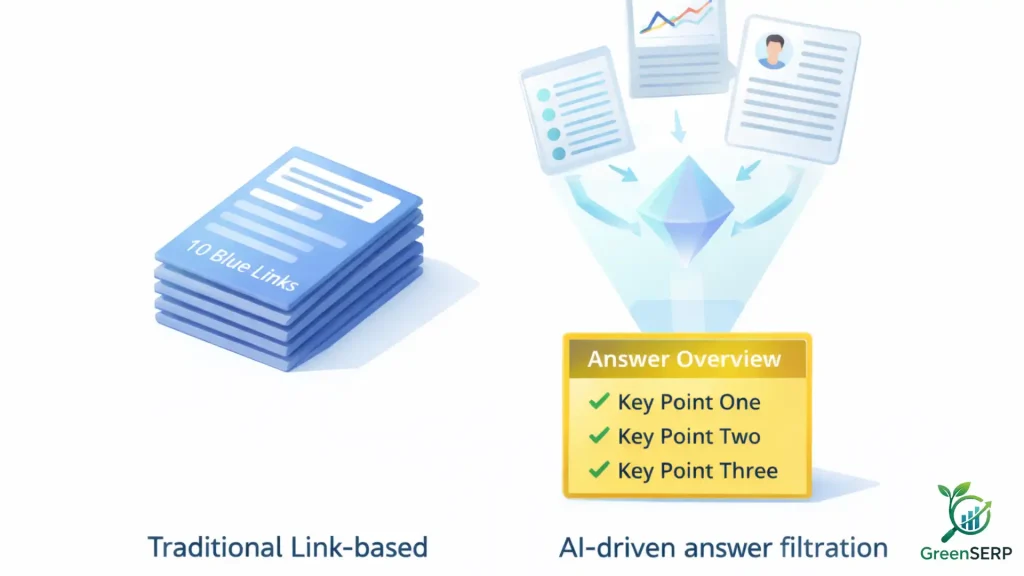
Traditional vs. AI-Driven Filtration Factors
The distinction between traditional and AI-driven filtration factors is crucial:
AI-driven filtration factors demand a more granular, fact-checked, and relevancy organized approach to content. The AI needs to efficiently understand the core association, supporting evidence, and overall context to integrate it into a summarized answer.
Section 1: Content Structuring for AI Filtration
To be cited by AI Overviews, your content must be structured in a way that allows Google’s models to easily extract, verify, and filter information. This means moving beyond just satisfying search queries to explicitly serving factual, verifiable answers.
Semantic Clarity & Topic Authority
AI models excel at understanding topics, not just keywords. Your content needs to demonstrate a deep, smooth understanding of a subject, not just a surface-level mention of keywords.
Best Practices for Semantic Clarity & Topic Authority:
- Comprehensive Coverage: Address the topic thoroughly, covering related sub-topics and common questions. This helps AI understand your holistic understanding and authority.
- Logical Hierarchy: Use H2s, H3s, and paragraph breaks to create a clear content hierarchy. This guides the AI through your arguments and helps it identify key points.
- Keyword Variation & Entities: Use a rich vocabulary of related terms and entities, not just the primary keyword. This helps the AI understand the semantic breadth of your content.
- Define Terms: Clearly define complex terms or jargon, especially in the introduction or dedicated sections.
- Focused Paragraphs: Ensure each paragraph makes a clear point or answers a specific question. Avoid long indirect sentences.
- Bullet Points & Numbered Lists: Utilize these for easy finding and extraction of key information by AI. This is particularly effective for “how-to” guides, lists of features, or steps in a process. Finding the specific questions your audience is asking is the first step to triggering AI Overviews. We recommend using tools like Perplexity and Answer The Public, you can see how to use them in our guide on essential free AI tools for 2026.
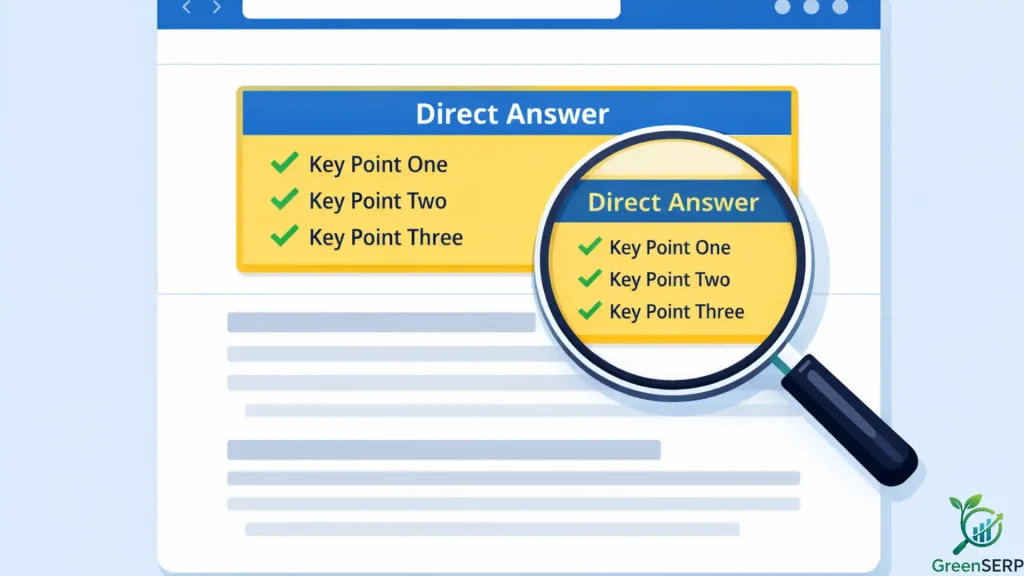
The ‘Answer-First’ Format
The “Answer-First” format prioritizes providing a direct, concise answer to a probable user question at the beginning of a section or article. This isn’t about compromising human readability; it’s about optimizing for AI extraction while still encouraging further human engagement.
How to Implement ‘Answer-First’:
- Direct Answer in Introduction: Start your article or relevant H2 section with a clear, concise answer to the primary question it addresses. Aim for 2-4 sentences.
- Example: If the query is “What is AI Mode in Google?”, your intro might begin: “Google’s AI Mode is an advanced search experience leveraging generative AI to provide filtered answers, direct information, and conversational interactions, moving beyond traditional 10-blue-link results to offer a more immediate and comprehensive information delivery.”
- Elaborate and Explain: After the direct answer, you can then elaborate, provide context, offer examples, and delve into supporting details.
- Use Q&A Formatting: Incorporate actual questions (e.g., using H3s or bolded text) followed immediately by their answers. This mirrors how AI Overviews present information.
- Concise Language: Avoid jargon where possible, or explain it immediately. The AI is looking for easily digestible information.
By adopting an “Answer-First” approach, you make it incredibly easy for Google’s AI to understand the core information and utilize your content for its Overviews, potentially leading to a citation.
Section 2: Technical SEO for AI Visibility
While content quality is the most important, technical SEO provides the structural organisation that helps AI models discover, understand, and trust your content. It provides clear signals that help AI understand what the content means and why it is reliable.

Structured Data & Schema
Structured data, specifically JSON-LD schema, helps search engines (and by extension, AI models) understand the meaning and context of your content. It turns unstructured text into machine-readable data, making it easier for AI to extract facts, relationships, and the overall purpose of your page.
Practical Checklist for Schema Implementation:
- Article Schema: Essential for blog posts, news articles, and reports. Include headline, description, image, datePublished, author, and publisher to ease AI’s understanding of the content’s origin and context.
- FAQPage Schema: If your content includes a list of questions and answers, FAQPage schema is invaluable for direct inclusion in AI Overviews and Google’s SERP features.
- HowTo Schema: For step-by-step guides, HowTo schema explicitly outlines the steps, ingredients, or tools needed. This is ideal for instructional content.
- FactCheck Schema: If your content breaks misinformation or verifies facts, FactCheck schema can boost trustworthiness signals.
- AboutPage and ContactPage Schema: While not directly for content, these help establish your site’s overall trustworthiness and authoritativeness by providing clear information about your organization.
- Person Schema (for Authors): Use this for author profiles, linking to their credentials and social profiles, further strengthening EEAT signals.
Short Code Block Example (simplified Article schema):
JSON
<script type=”application/ld+json”>
{
“@context”: “https://schema.org”,
“@type”: “Article“,
“headline”: “SEO for Google AI Overviews & AI Mode in 2026″,
“description”: “Learn how to optimize for Google’s AI Overviews and AI Mode in 2026. A practical guide to earning citations, clicks, and visibility in the new search landscape.“,
“image”: “https://www.example.com/ai-seo-guide.jpg”,
“datePublished”: “2024-10-27T09:00:00+08:00″,
“author”: {
“@type”: “Person“,
“name”: “Your Expert Name“,
“url”: “https://www.example.com/about/your-expert-name”
},
“publisher”: {
“@type”: “Organization“,
“name”: “Your Company Name“,
“logo”: {
“@type”: “ImageObject“,
“url”: “https://www.example.com/logo.png”
}
}
}
</script>
Source Attribution & Citation Signals
For AI to confidently understand your content as a reliable source and cite it, you need to make its reliability accepted.
How to be the Ideal Source for AI to Cite:
- Citations within Content: Just like academic papers, cite your sources. Link to original studies, research papers, official government statistics, or reputable industry reports. This allows the AI to understand the factual basis of your claims.
- Original Research & Data: Publish your own studies, surveys, or unique data analyses. Original research is highly valuable for AI Overviews as it represents primary data.
- Data Visualizations: Use charts, graphs, and infographics to present data clearly. Ensure these are supported by descriptive text and proper sourcing.
- Expert Quotes & Endorsements: Include quotes from recognized experts in your field. These add weight and authority.
- Clear Date Stamps: Ensure your content is clearly dated and, if updated, shows the “last updated” date. Freshness can be a signal of relevance and accuracy.
- “About Us” & Author Pages: The most important “About Us” pages, transparent contact information, and detailed author bios (with credentials) help AI understand the trustworthiness and expertise behind the content.
- Evidence-Based Claims: Every factual claim should be supported by evidence, either directly within the text or linked externally. Avoid making fake statements.
By explicitly providing these signals, you help Google’s AI understand that your content is a credible and verifiable source, making it a prime candidate for citation.

Section 3: The Optimization Workflow
Adapting to AI Mode requires a systematic approach. Here’s a practical, step-by-step workflow for optimizing your content:
- Audit for AI Citation Potential:
- Identify existing high-traffic pages, core pillar content, and articles that answer specific user questions.
- Analyze current SERPs for these queries: Are there AI Overviews? What types of sources are cited? What information is being filtered?
- Look for content gaps where your site could provide a definitive, citable answer.
- Refine Content for Semantic Clarity & ‘Answer-First’:
- For each target piece of content, identify the core questions it answers.
- Rewrite introductions and H2/H3 sections to begin with direct, concise answers (2-4 sentences).
- Enhance semantic depth: Add related entities, use varied vocabulary, and ensure comprehensive topic coverage.
- Break down dense paragraphs into scannable bullet points and numbered lists where appropriate.
- Strengthen EEAT Signals:
- Review author bios: Are credentials clear? Do they link to other authoritative work?
- Ensure content demonstrates clear experience where applicable (e.g., case studies, personal insights).
- Add internal and external links to authoritative sources to back up claims.
- Verify all facts and figures, and cite original sources explicitly.
- Implement or Enhance Structured Data:
- Add or update relevant JSON-LD schema (e.g., Article, FAQPage, HowTo) to all target pages.
- Use Google’s Rich Results Test tool to validate your schema.
- Optimize for Source Attribution:
- Add clear citations for all data, statistics, and expert quotes.
- If you have original research, highlight it and link directly to the data/methodology.
- Ensure “Last Updated” dates are accurate and visible.
- Monitor & Iterate:
- Track AI Overview visibility for your target queries.
- Analyze Google Search Console for new impressions, clicks, and discover new questions users are asking.
- Continuously update content for accuracy, freshness, and completeness.
AI Mode Optimization Checklist:
- Conduct content audit for AI citation opportunities.
- Identify core questions answered by each piece of content.
- Implement ‘Answer-First’ formatting in introductions and key sections.
- Enhance semantic depth and comprehensive topic coverage.
- Strengthen author EEAT signals (bios, credentials, external validation).
- Verify and add explicit citations for all facts and figures.
- Implement/update relevant JSON-LD schema (Article, FAQPage, HowTo).
- Use bullet points and numbered lists.
- Ensure mobile-friendliness and fast page load times.
- Monitor AI Overview presence and citation frequency.
Section 4: Examples & Case Study
Let’s consider a hypothetical example of a blog post titled “Understanding the Benefits of Intermittent Fasting.”
Before Optimization (Traditional SEO Focus):
- Content: Focused heavily on keywords like “intermittent fasting benefits,” “fasting diet,” “weight loss.”
- Structure: Standard blog format, introductory paragraphs, then sections on benefits, then how-to.
- Answers: Benefits were spread across paragraphs, sometimes requiring reading multiple sentences to grasp the core idea.
- Citations: General mentions of “studies show,” but few direct links to specific research papers.
- Schema: Basic WebPage schema, no specific Article or FAQPage.
- AI Outlook: Hard for AI to process and get direct, citable facts due to scattered information. Might appear in Overviews, but unlikely to be the primary cited source for specific benefits.
After Optimization (AI Mode Focus):
- Content: Semantic and topic-focused, using natural language around user intents like “Does intermittent fasting aid weight loss?” Keywords emerge organically without stuffing.
- Structure: Question-driven with H2/H3 headers as exact queries (e.g., “## How Does Intermittent Fasting Promote Weight Loss?”), followed by 1-2 sentence direct answers, then supporting details. Includes FAQ section with schema-marked Q&A.
- Answers: Concise, scannable one-sentence core answers upfront. Benefits consolidated into tables or lists for instant parsing
- Citations: Inline links to primary sources (e.g., Smith et al., 2023) with quantifiable claims like “insulin resistance by up to 3-6% within 8-12 weeks for individuals adhering to a regular fasting schedule.”
- Schema: Article + FAQPage + HowTo schemas; JSON-LD for entities like “IntermittentFasting.”
- AI Outlook: Excels in AI overviews via reliable, citable snippets—positioning as top source for queries with strong E-E-A-T and structured data.
Original Snippet Example:
“Many people wonder about intermittent fasting and its positive effects on the body. While it’s largely known for helping with weight management, research also suggests a range of other health advantages that contribute to overall well-being. These include improved metabolic health and cellular repair processes, making it a popular choice for those looking to enhance their health beyond just shedding pounds.”
Optimized Snippet (Answer-First, Semantic Clarity):
“Intermittent fasting offers several key benefits, including effective weight management, improved metabolic health, and enhanced cellular repair processes. These advantages contribute significantly to overall well-being, making it a powerful dietary strategy. For instance, studies indicate a reduction in insulin resistance by up to 3-6% within 8-12 weeks for individuals adhering to a regular fasting schedule (Smith et al., 2023).”
Restructured Content Overview:
| Aspect | Before Optimization | After Optimization for AI Mode |
| Title | “Understanding the Benefits of Intermittent Fasting” | “Intermittent Fasting: Proven Benefits for Metabolic Health & Weight Management” |
| Introduction | General overview, keyword-heavy. | Direct answer: “Intermittent fasting (IF) is an eating pattern with benefits including…” |
| H2/H3 Structure | “What is IF?”, “How to Do IF?”, “Benefits of IF” | “Key Benefits of Intermittent Fasting” (H2), then specific benefits as H3s: “Weight Loss & Fat Burning,” “Improved Metabolic Health,” “Cellular Repair (Autophagy)” |
| Content within H3 | Paragraphs explaining benefits, often blending ideas. | Starts with 1-2 sentence direct answers for each H3, followed by elaboration and specific cited data. |
| Citations | Vague “research shows,” few external links. | Specific citations (e.g., “(Smith et al., 2023)” with linked bibliography/reference section. |
| Schema Markup | Basic WebPage. | Article schema, FAQPage for common questions about IF, Person schema for author. |
| Visual Aids | Generic stock images. | Custom infographic summarizing benefits, clearly sourced. |
| EEAT Signals | Author bio minimal. | Detailed author bio with medical credentials, linked to LinkedIn profile. |
| AI Citation Potential | Low for specific facts, higher for general topics. | High for direct answers and specific statistics within AI Overviews. |
By restructuring the content and adding explicit signals, this hypothetical page is now far more likely to be a primary cited source within a Google AI Overview for queries related to intermittent fasting benefits, driving both authority and clicks.
Section 5: Common Pitfalls to Avoid
Navigating the AI search landscape successfully also means reducing common mistakes:
- Over-Optimizing for Keywords (Keyword Stuffing): AI models understand relevance. Forcing keywords unnaturally will degrade content quality and signal low EEAT, hindering AI’s ability to process genuine authority. Focus on comprehensive topic coverage instead.
- Ignoring Source Attribution: Making claims without backing them up with verifiable sources is a critical error. AI needs to take trust, and uncited information is inherently untrustworthy for generative models. This includes not linking to original studies or data.
- Poor Content Hierarchy and organization: Content that is a wall of text, lacks clear headings, or doesn’t use lists and bullet points is difficult for both humans and AI to process and extract information from. This makes it harder for AI to grasp key takeaways.
- Neglecting Mobile Experience and Page Speed: While AI primarily extracts text, the underlying quality signals still matter. A poor mobile experience or slow loading page can indirectly signal a low-quality site, impacting overall site authority that AI models consider.
- Producing Superficial or AI-Generated Only Content: Relying solely on AI tools to generate content without human editing, fact-checking, and the mixture of unique experience will result in generic, unauthoritative content.
AI models are trained on existing data; they cannot generate truly novel insights or original research, which is what they increasingly prioritize for citations. This type of content struggles to help the AI produce genuine value. - Failing to Update Content: Information becomes outdated quickly. Content that isn’t regularly updated with the latest research, statistics, or best practices will quickly lose its relevance and authority in the eyes of AI.
Conclusion
The shift towards Google AI Overviews and AI Mode represents a profound evolution in search, demanding a proactive and strategic response from digital marketers and content creators. Success in 2026 will no longer be solely about ranking high, but about being understood, filtered, and cited by AI models that prioritize clarity, authority, and trustworthiness.
By focusing on relevance clarity, adopting an “Answer-First” content structure, implementing strong structured data. Most importantly attributing your sources, you can significantly increase your content’s likelihood of being selected as a primary citation in AI Overviews. Remember, Google’s AI wants to show the best, most reliable information to answer user queries fast.
Don’t wait for these changes to be fully implemented. Start auditing your content today using the checklist provided in this guide. Adapt your content strategy to the AI-first world, and position your brand as an indispensable source of information in the new era of search.