

Let’s be real: You know you need content marketing to grow your business. But as a solopreneur or freelancer, you are a “one-person army.” You are the CEO, the sales team, and customer support. Writing a 2,000-word article feels like a luxury you can’t afford.
For a long time, the only options were to burn out writing at midnight or hire expensive agencies or a freelancer.
Then came AI content writing.
Tools like ChatGPT and Claude have leveled the playing field, allowing startups and freelancers to compete with big brands. But there is a problem: simply telling a bot to “write a blog post” results in generic, robotic fluff that Google ignores.
If you want traffic, you need a system. This guide covers the exact freelance writing workflow you need to write blog posts with AI that are authentic, high-quality, and designed to rank.
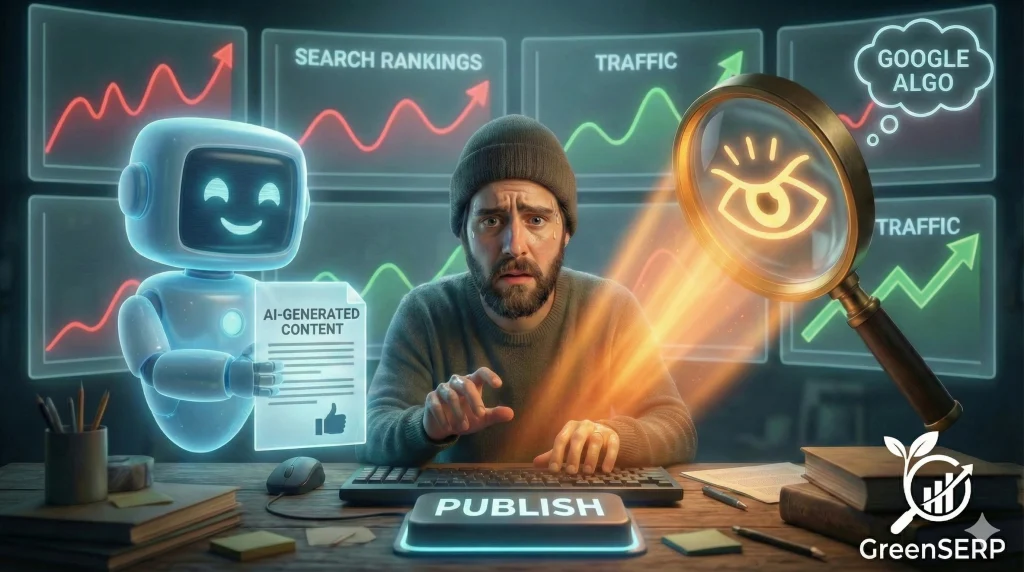
The Elephant in the Room: Will Google Ban You?
Before we touch a tool, we need to answer the question keeping you awake at night: Can AI content rank on Google in 2026?
The short answer is Yes.
The long answer involves understanding Google’s stance. Google does not penalize content just because it was generated by AI. According to the Google Helpful Content Update, they care about the quality of the result, not the method of production.
However, they prioritize E-E-A-T:
1. Experience
You should have first hand experience with the product or services that you are writing an article. It will be helpful to tell your users about the real world experience of the products and services because you have experienced the products and services by yourself.
2. Expertise:
You should have all the knowledge and skills to be credible. You should be able to convince your user that you are an excerpt of the niche of topic that you are talking about.
3. Authoritativeness:
It explains you should be recognized as a reliable resource in your industry. All the things you mentioned in the article should exist in the real world. No place of creating false, imaginary things.
4. Trustworthiness:
The content should be real, transparent on which your readers should be able to rely on. All the facts, truth statistics mentioned in the article should be updated and has real world existence. You should double check the facts and mention their sources in article.
AI is great at information, but it has zero Experience. It has never run a startup or dealt with a difficult client. If you rely 100% on AI, you will fail the E-E-A-T test. The secret to avoiding Google penalties is adopting a “Cyborg” approach: AI provides the data and structure; you provide the experience and soul.

Phase 1: Strategy (Don’t Just “Ask ChatGPT”)
Most people fail at AI writing for SEO because they treat the AI like a magic wand rather than a research assistant. Before you write a single word of a draft, you need a plan.
1. Find Low-Hanging Fruit
You can’t compete with HubSpot or Forbes on day one. You need long-tail keywords—specific, lower-volume phrases that your customers are actually typing.
Prompt Idea: “I am a freelance graphic designer targeting small tech startups. Generate a list of 20 long-tail keyword ideas that solve specific problems for this audience, focusing on ‘how-to’ and strategy.”
2. Analyze Keyword Intent
You need to know why someone is searching. Are they looking to buy (Transactional) or learn (Informational)?
Strategy: Use tools (or search manually) to see what is currently ranking. This is basic SERP analysis. If the top 5 results are “How-to” guides, don’t write a sales page.

Phase 2: The “Cyborg” Workflow (Step-by-Step)
Here is the best AI writing workflow for beginners and busy founders.
Step 1: The Skeleton (The Outline)
Never ask AI to write a full post from scratch. It will ramble. Instead, ask it to build an AI article outline based on successful content.
The Prompt: “Act as an SEO specialist. Create a detailed blog post outline for the keyword ‘[Your Keyword]’. Include an H1, H2s, and H3s. Analyze the structure of top-ranking articles to ensure we cover all necessary subtopics.”
Step 2: The Meat (Drafting Section-by-Section)
To maintain quality, write the article in chunks. This allows you to course-correct the AI if it goes off-track.
Prompt Engineering Tip: Define the tone of voice.
Bad: “Write the introduction.”
Good: “Write an engaging introduction for this outline. Use a tone that is professional but conversational, like an expert talking to a peer. Address the reader’s pain points immediately.”
Step 3: The Fact-Check
AI hallucinates. It will invent statistics and quotes. Always perform a fact-check on any data the AI provides. This is crucial for maintaining Trustworthiness (the “T” in E-E-A-T).

Phase 3: The “Your Factor” (Humanizing the Content)
This is the most important step. This is how you differentiate your brand from the sea of “AI slop” flooding the internet. You must humanize AI text.
1. Inject Personal Experience
AI cannot say, “I once lost a client because of bad kerning.” You can.
Action: Go through the draft and add “I” statements. Share a quick story, a mistake you made, or a client win. This signals to Google (and readers) that a human is behind the wheel.
2. Optimize for Readability
AI tends to use long, passive sentences.
Use a readability score tool (like Hemingway App) to chop up long sentences.
Break up walls of text with bullet points and bold text.
3. Technical SEO Polish
Ensure you are using LSI keywords (related terms). If you are writing about “Remote Work,” LSI keywords might be “digital nomad,” “productivity tools,” or “asynchronous communication.”
Tool Tip: You can use tools like Surfer SEO or NeuronWriter to analyze your content and suggest these keywords.
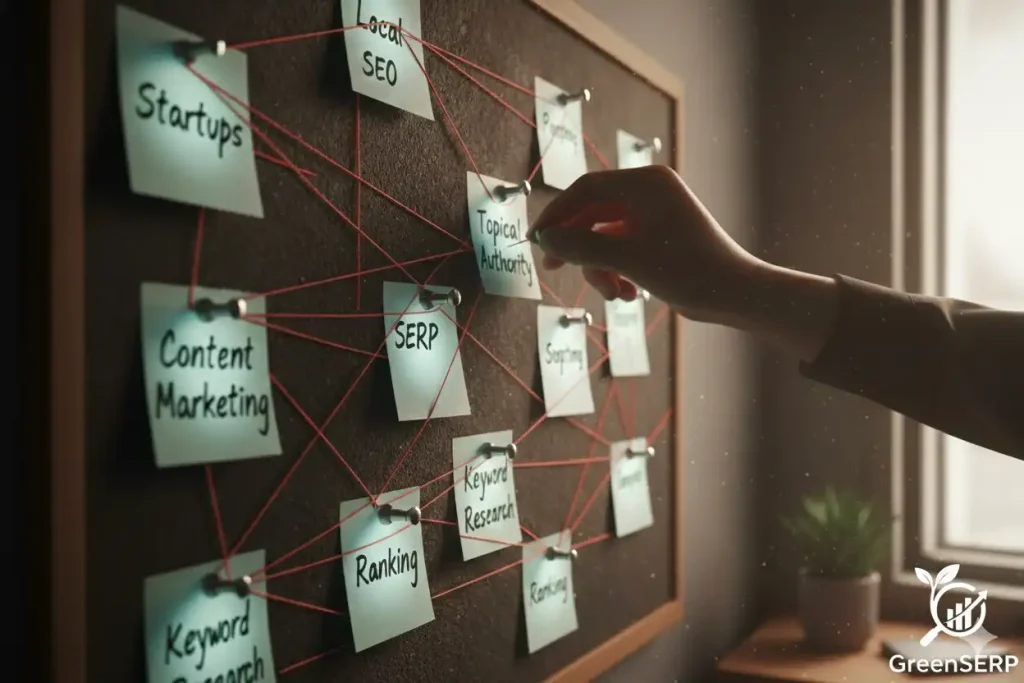
Phase 4 :The Toolkit: Saving Money While Scaling
You don’t need a $500/month software stack. Here is cost-effective content marketing for every budget.
1. The “Bootstrapper” Stack (Free)
Research & Writing: ChatGPT (Free Version) or Microsoft Copilot.
Editing: Hemingway App (Web version is free).
SEO Check: SEM Rush Could add 1 website and check 100 pages of website in free version
2. The “Pro Freelancer” Stack (Paid)
Writing: ChatGPT Plus (access to GPT-4o is worth the $20).
Optimization: Surfer SEO or Frase (to guarantee keyword density).
Detection: A premium plagiarism checker like Grammarly Premium.
FAQ: Rapid Fire Answers
Q: How to scale blog production with AI as a solo founder?
A: Batch your work. Spend Monday doing keyword research for 4 topics, Tuesday for generating outlines and Wednesday for drafting. You can produce a month of content in 3 days.
Q: Does AI content hurt SEO?
A: Only if it is unedited, inaccurate, or unhelpful. If you edit the content to be valuable to the user, it can rank perfectly well.
Q: What is the best AI writer for blogs?
A: ChatGPT is the most versatile for the price. Jasper AI is excellent for templates, and Claude is often cited as having a more natural, human-like writing style out of the box.
Conclusion
AI SEO strategy isn’t about cheating; it’s about efficiency. As a startup or freelancer, your time is your most valuable currency.
By using AI to handle the heavy lifting like research, outlining, and drafting, you free up your energy to focus on what you do best: adding value, sharing expertise, and running your business.
Don’t let the fear of perfection stop you. Use this workflow, write your first post, and hit publish.
Ready to speed up your workflow? Start by building your list of ChatGPT SEO prompts and create your first outline today.