
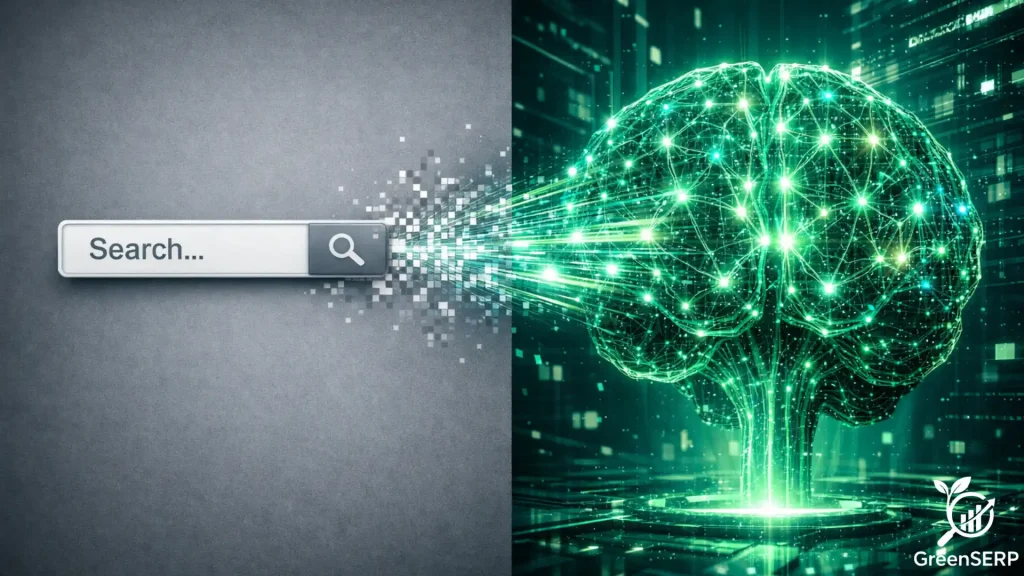
The digital environment is undergoing its most important transformation since the invention of search engines. For years, content strategy revolved around Search Engine Optimization (SEO), optimizing for algorithms that crawled, indexed, and ranked pages based on keywords, backlinks, and technical factors.
But the rise of generative AI models has fundamentally shifted the playing field. We are rapidly moving into the era of Generative Engine Optimization (GEO), where success depends not just on visibility, but on clarity, authority, and the ability of AI models to understand the accurate information directly from your content.
In 2026, content that fails to provide clear, logically structured, and context rich information will be overlooked. Generative AI doesn’t merely present a list of links; it filters answers, generates summaries, and provides direct responses. For your content to be a source that these engines confidently cite, it must be engineered for AI understanding. This comprehensive guide will equip marketers, content creators, and SEO professionals with the essential checklist to adapt their content structure for the GEO first world.
Table of Contents
- The Great Shift: From SEO to GEO “ Why Traditional Keyword Stuffing Fails Generative AI”
- The Core Concept: Helping AI Understand Meaning
- The 2026 Content Structure Checklist
- Your Action Plan for GEO Readiness
The Great Shift: From SEO to GEO
For decades, Search Engine Optimization (SEO) was about optimizing content for web crawlers that primarily focused on keywords, links, and technical signals to rank pages. The goal was to appear high on a Search Engine Results Page (SERP), driving clicks. While traditional SEO still holds some relevance, it’s no longer the sole determinant of digital success at the moment.
Enter Generative Engine Optimization (GEO). With the widespread adoption of large language models (LLMs) and generative AI, search is evolving from a link delivery system to an answer delivery system. Users are increasingly turning to AI assistants and integrated generative search experiences that provide filtered, conversational responses rather than just a list of blue links. GEO is the practice of optimizing your content to be easily understood, processed, and cited by these generative AI models.
The shift from SEO to GEO isn’t just about algorithms; it’s about understanding knowledge. We’re moving from a system that finds information to one that understands and give knowledge.
Read the research paper Generative Engine Optimization” by Pranjal Aggarwal et al
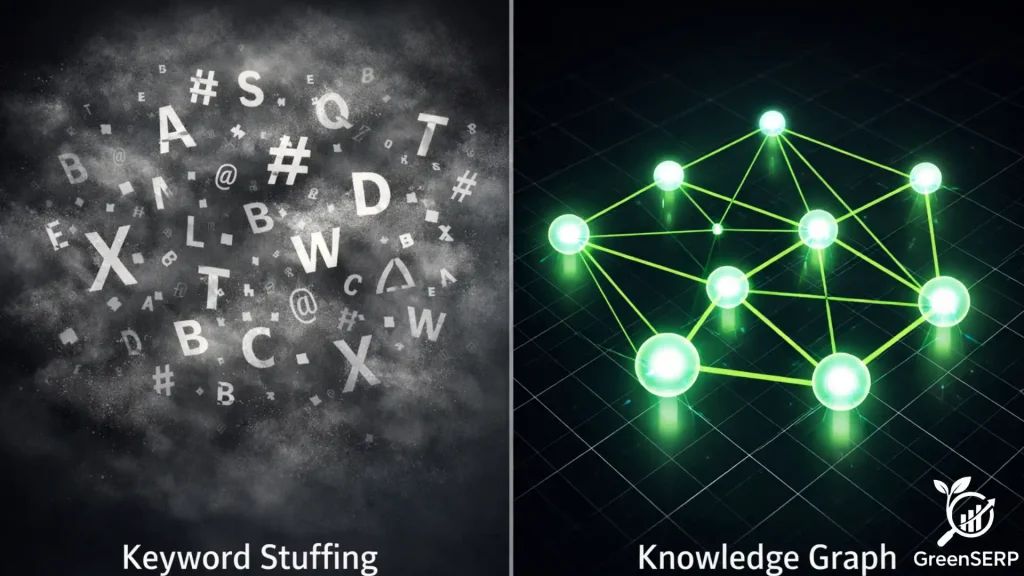
Why Traditional Keyword Stuffing Fails Generative AI
Traditional keyword stuffing, the practice of overloading content with target keywords in an attempt to manipulate rankings, is not only obsolete but harmful in the GEO era. Generative AI models operate on a deep understanding of natural language, context, and relevant relationships. They don’t just match keywords; they understand meaning, intent, and relevance.
An LLM can instantly identify keyword stuffed content as low quality, unnatural, and lacking genuine value. Such content provides insufficient context for the AI to process accurate facts or relationships, making it unreliable as a source. Instead of being cited, it’s likely to be ignored or even penalized. The focus must shift from what words are present to what knowledge is conveyed and how clearly.
The Core Concept: Helping AI Understand Meaning
At the heart of GEO lies the concept of understanding the meaning of the content. Generative AI models, specifically LLMs, don’t read content in the human sense. They process vast amounts of text, identifying patterns, relationships, and entities to build an internal representation of knowledge.
When a user asks a question, the AI doesn’t simply retrieve a matching sentence; it finds the most probable and accurate answer from its learned knowledge base, often filtering information from multiple sources.
To be cited, your content must make it clear for the AI to understand correct information. This requires:
- Explicit Structure: Clear headings, lists, tables, and consistent formatting provide strong signals about the relationships between different pieces of information.
- Relevance Clarity: Using precise language, defining terms, and establishing clear entities prevents ambiguity, allowing the AI to accurately map concepts.
- Logical Flow: Content that progresses logically, building arguments or explanations step by step, helps the AI understand the complete narrative and the causal links between ideas.
When content is structured logically and relevantly rich, the AI can more effectively understand the core facts, arguments, and data points, thereby increasing the likelihood of your work being recognized as a credible source and cited in its generative responses.

The 2026 Content Structure Checklist
This checklist is your blueprint for creating content that generative AI models can easily process, understand, and confidently cite.
1. Semantic Header Hierarchy: Guiding the AI’s Understanding
Your header structure (H1, H2, H3, etc.) is no longer just for human readability or basic SEO; it’s a critical map for AI to understand the logical flow and relationship between sections of your content. A strong relevant hierarchy allows AI to quickly grasp the main topics and their sub components.
- H1: Your single, overall topic. (Already defined by the article title).
- H2: Main sections, representing distinct sub topics that directly support the H1. Each H2 should introduce a major concept or theme.
- H3: Subsections within an H2, elaborating on specific aspects of the H2’s topic. These should logically flow from and contribute to the H2.
- H4+: Use sparingly for granular detail within an H3, if absolutely necessary, but prioritize clear H2/H3 for AI digestibility.
Best Practices:
- Logical Progression: Ensure headers move from general to specific.
- Keyword Integration: Naturally integrate relevant phrases into headers to signal topic relevance without keyword stuffing.
- Conciseness: Keep headers clear and to the point.
Before vs. After: Header Hierarchy
Before (Poor Hierarchy for AI Inference):
- My Article Title (h1)
- Introduction(h2)
- What is Generative AI?(h2)
- How to Use Generative AI(h2)
- Prompt Engineering Tips(h2)
- Ethical AI Considerations(h2)
- Conclusion(h2)
Issue: Every main point is an H2, offering little nested structure for AI to understand a deeper hierarchy or relationship between How to Use a Prompt Engineering.
After (Improved Hierarchy for AI Inference):
From SEO to GEO: The 2026 Content Structure Checklist That Gets You Cited
The Great Shift: From SEO to GEO
Why Traditional Keyword Stuffing Fails Generative AI
The Core Concept: Helping AI Infer Meaning
The 2026 Content Structure Checklist
1. Semantic Header Hierarchy: Guiding the AI’s Understanding
Before vs. After: Header Hierarchy (Example of H4 use for this article’s specific section)
2. Entity Clarity & Context: Defining What Matters
3. Schema & Data Structuring: Beyond JSON-LD
4. Citation-Friendly Formatting: Earning the Mention
5. Intent Alignment: Anticipating and Answering
Benefit: This structure clearly tells the AI that Why Traditional Keyword Stuffing Fails Generative AI is a sub-point under The Great Shift, helping it to understand a more unique understanding of the article’s argument.
2. Entity Clarity & Context: Defining What Matters
Generative AI builds knowledge graphs by identifying and understanding entities like people, places, organizations, concepts, and things. To ensure your content is accurately processed and cited, you must make these entities clear.
- Define Terms: Always define new or complex terms upon first use.
- Consistent Naming: Use the same name or acronym consistently throughout the article. Avoid variations unless promptly stating they are synonyms.
- Provide Context: When introducing an entity, briefly explain its relevance to the current discussion.
- Clarification: If an entity could be confused with another (e.g., Apple the company vs. apple the fruit), provide immediate clarification. .
Before vs. After: Entity Clarity
Before (Unclear): GenAI is changing everything. Marketers need to understand its impact. It makes creating content so much easier, but you still need to be careful with AI. Issue: GenAI is introduced without definition. AI is used generically, potentially referring to GenAI or broader AI concepts, making it hard for the AI to understand the specific scope.
After (Clear and Contextual): Generative AI (GenAI), a subset of artificial intelligence focused on creating new content, is fundamentally reshaping the marketing landscape. Marketers must understand GenAI’s great impact. While GenAI tools significantly streamline content creation, practitioners must remain vigilant about responsible AI use, encompassing broader ethical considerations beyond just generation. Benefit: Defines Generative AI (GenAI) immediately. Distinguishes GenAI from the broader AI where relevant, allowing the generative engine to understand the meanings and relationships between these entities.
3. Schema & Data Structuring: Beyond JSON-LD
While JSON-LD schema markup (the typical way to structure data for search engines) remains valuable, GEO demands that your in-content structure also serves as clear, machine-readable data. This includes using native HTML/Markdown elements to organize information.
- Tables: Use tables for comparisons, feature lists, statistical data, and any information that benefits from a row/column format. AI can easily extract structured data from tables.
- Lists: Use ordered lists (<ol>) for step-by-step instructions or sequences, and unordered lists (<ul>) for features, benefits, or bulleted points. These clearly delineate individual items.
- Definitions Lists (<dl>, <dt>, <dd>): Excellent for glossaries or defining key terms.
- Code Snippets/Blocks: For showing examples of code, syntax, or structured data (like the examples in this article).
- Internal Linking: Strategically link to related content within your site using descriptive anchor text. This helps AI understand the relationships between your pages.
Example: Structured Data in Markdown
Poor (Paragraph-based, hard for AI to process): To optimize for GEO, you need relevant headers, clear entities, structured data, citation friendly formatting, and intent alignment. These are the five key areas.
Good (Structured List for easy AI inference):
To optimize for GEO, focus on these five key areas:
1. Relevant Header Hierarchy: Guide AI through logical content flow.
2. Entity Clarity & Context: Define terms and maintain consistent naming.
3. Schema & Data Structuring: Utilize tables, lists, and code for clarity.
4. Citation-Friendly Formatting: Ensure quotes and sources are explicit.
5. Intent Alignment: Structure content to directly answer user queries.
Benefit: The numbered list makes it effortless for an AI to understand the exact number of key areas and their specific names, making it a perfect candidate for a direct answer or summary.

4. Citation-Friendly Formatting: Earning the Mention
If you want generative AI to cite your content, you must make it simple for the AI to identify direct quotes, statistics, and original research, along with their sources. AI values credible, attributable information.
- Blockquotes for Quotes: Use blockquotes for direct citations from other sources.
- Explicit Attribution: Immediately follow quotes, statistics, or data points with clear attribution (author, source, link).
- Numbered References: For more academic or data-heavy content, consider using a numbered reference system at the end of the article, citing sources like research papers or surveys.
- Distinct Formatting for Data: Bold or italicize key statistics within sentences to make them stand out.
Example: Formatting for Citations
Before (Hard for AI to attribute): Content strategists agree that generative AI is transforming content creation, with some noting a 40% efficiency gain. A recent study by XYZ Research supports this. Issue: The 40% figure is mentioned, but its direct source isn’t immediately clear or easily extractable for a citation.
After (Easy for AI to attribute and cite):
> Generative AI is not just changing content creation; it’s accelerating it, delivering an average 40% efficiency gain for early adopters.
> — Jane Doe, Lead Analyst at XYZ Research (Q3 2025 Market Report) [Link to Report]
In their Q3 2025 Market Report, XYZ Research highlighted that Generative AI is poised to become the most impactful technology for content strategists, with early adopters reporting a 40% efficiency gain. This clearly demonstrates the shift.
Benefit: The blockquote and explicit attribution, along with the bolded statistic, enable the AI to readily infer the exact quote, the source, and the specific data point, making it highly probable for direct citation.
5. Intent Alignment: Anticipating and Answering
Content optimized for GEO anticipates user intent and structures information to directly answer potential queries comprehensively. Think of your content as a mini knowledge base for a specific topic.
- Answer the What, Why, How: Ensure your content addresses the fundamental questions a user might have about the topic.
- Predict Follow-Up Questions: After answering a primary question, pre-emptively address logical follow-up questions in subsequent sections. This creates a complete and satisfying user (and AI) experience.
- Use Question-Based Headings (Sparingly): While not every heading needs to be a question, strategically using How-to or Why is X important? headings can clearly signal intent to AI.
- Problem-Solution Structure: Frame content around common problems and provide clear, actionable solutions.
Before vs. After: Intent Alignment
Before (Broad, less direct for specific queries):
Content Strategy Basics
Understanding Your Audience
Keyword Research
Content Creation Process
Issue: While good for human browsing, an AI might struggle to infer direct answers to specific user intents like How do I research keywords for my blog? or What’s the best content creation workflow?
After (Aligned with potential user intents):
Mastering Content Strategy for GEO
Understanding Your Audience: Who Are You Trying to Reach?
Conducting Effective Keyword Research in the AI Era
How to Identify High-Intent Keywords for Generative Search
Streamlining Your Content Creation Workflow with AI Tools
Step-by-Step: From Ideation to Publication
Benefit: The revised headings are more specific and directly address common user intents (e.g., How to Identify High-Intent Keywords). This makes it easier for an AI to infer that this section contains the answer to that particular query, increasing its chances of being cited for a direct response.
Your Action Plan for GEO Readiness
The transition from SEO to GEO is not a single event but an ongoing evolution. By integrating this checklist into your content strategy, you’ll be well-positioned to thrive in the generative AI landscape of 2026 and beyond.
- Audit & Restructure Existing Content: Prioritize your highest-value content. Re-evaluate its header hierarchy, entity clarity, and internal structuring.
- Prioritize Clarity Over Keyword Density: Shift your focus from simply including keywords to creating content where AI can easily infer meaning and extract facts.
- Embrace Structured Data in Content: Actively use tables, ordered lists, and clear definitions within your prose, not just in invisible schema.
- Practice Proactive Attribution: Make it a habit to explicitly cite sources, data, and quotes within your content, using clear formatting.
- Map Content to User Intent: Continuously research and understand your audience’s questions, then structure your content to answer them directly and comprehensively.
- Educate Your Team: Ensure all content creators, marketers, and strategists understand the principles of GEO and how to apply this checklist.
The future of content is about building trust and authority not just with human readers, but with the intelligent systems that mediate their information consumption. By mastering these structural principles, you’re not just optimizing for an algorithm; you’re optimizing for understanding, ensuring your content stands out as a reliable and citable source in the age of generative AI.”